
Processes and production in the
Elqui Valley


Processes and production in the
Elqui Valley

PROCESSES
The Pisco Denomination of Origin (D.O.) requires that the elaboration of this distillate must consist of
five stages, all of which must be carried out in the pisco region of Chile's Norte Chico:
PROCESSES
The Pisco Denomination of Origin (D.O.) requires that the elaboration of this distillate must consist of five stages, all of which must be carried out in the pisco region of Chile's Norte Chico:
Grape growth and harvesting
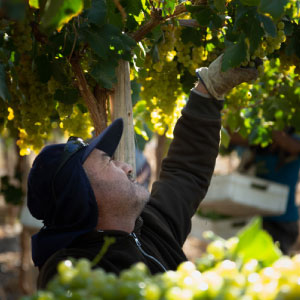
The harvest of Pisco grapes begins around mid-February each year. According to regulations, the exact time is determined by the ripeness of the grapes. They must have enough sugar to have a probable alcohol content of the grapes of at least 10.5 degrees.
Winemaking

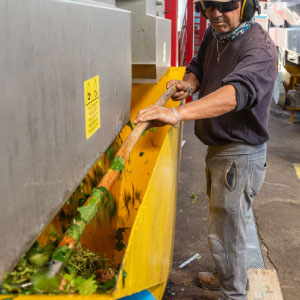
The grapes are pressed to extract their juice, which is vinified at controlled temperatures. This process takes an average of four weeks, depending on the techniques used for the process and the yeasts used for fermentation.
Destillation

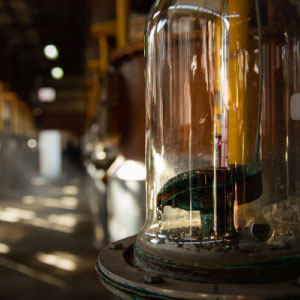
The distillation process is carried out in discontinuous copper alembic stills. The alembic is a device used for the distillation of liquids, through a process of evaporation of its content by heating, and subsequent condensation by cooling.
Repose in barrels

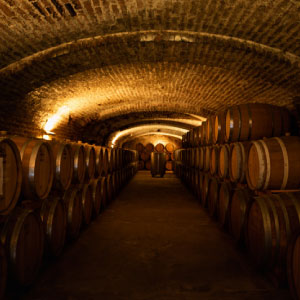
In the case of aged pisco, the alcohol obtained from distillation must have a repose period in wooden barrels, the most popular being those of rauli, American and French oak. This process adds woody notes and complexity to the grape flavor of the pisco and gives it an amber color, whose intensity will depend on the aging period.
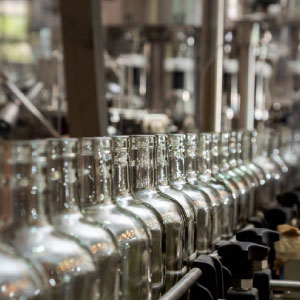
Packaging in consumer units
After the distill has reposed the required lapse of time in stainless steel tanks or wooden barrels -which will result in a transparent white or amber-colored pisco, respectively-, and has reached the desired conditions, it is bottled in origin to be marketed.
Grape growth and harvesting
The harvest of Pisco grapes begins around mid-February each year. According to regulations, the exact time is determined by the ripeness of the grapes. They must have enough sugar to have a probable alcohol content of the grapes of at least 10.5 degrees.
Winemaking

The grapes are pressed to extract their juice, which is vinified at controlled temperatures. This process takes an average of four weeks, depending on the techniques used for the process and the yeasts used for fermentation.
Destillation

The distillation process is carried out in discontinuous copper alembic stills. The alembic is a device used for the distillation of liquids, through a process of evaporation of its content by heating, and subsequent condensation by cooling.
Repose in barrels

In the case of aged pisco, the alcohol obtained from distillation must have a repose period in wooden barrels, the most popular being those of rauli, American and French oak. This process adds woody notes and complexity to the grape flavor of the pisco and gives it an amber color, whose intensity will depend on the aging period.
Packaging in consumer units
After the distill has reposed the required lapse of time in stainless steel tanks or wooden barrels -which will result in a transparent white or amber-colored pisco, respectively-, and has reached the desired conditions, it is bottled in origin to be marketed.
INNOVATION
Without leaving aside the centenary traditions, we have contributed our knowledge and experience developing a production process with the highest standards and technology-backed. We have developed our alembic stills which make our distillates unique products. Additionally, we have systematically and scientifically studied the distillation process, developing techniques that permit us to obtain a range of replicable spirits with singular and distinctive characteristics. We are thus able to produce differentiated products that meet the specific requirements of our customers. We have strict quality controls that assure our customers of the excellence of each batch they receive from us.
INNOVATION
Without leaving aside the centenary traditions, we have contributed our knowledge and experience developing a production process with the highest standards and technology-backed. We have developed our alembic stills which make our distillates unique products. Additionally, we have systematically and scientifically studied the distillation process, developing techniques that permit us to obtain a range of replicable spirits with singular and distinctive characteristics. We are thus able to produce differentiated products that meet the specific requirements of our customers. We have strict quality controls that assure our customers of the excellence of each batch they receive from us.
SUSTENTABILITY
We are one of the important companies in the Elqui Valley. There is a long and harmonious relationship among all those who make up the work team. We make sure that everyone who works at Destilería Río Elqui, without exception, feels proud of the fruits of our common efforts.
We provide an ample space in which those who join us can develop and grow in their skills and responsibilities.
We maintain a permanent concern for and participation in our surroundings, at the level of the industry of which we are part and the community to which we belong. We carry out a permanent review of production processes. We incorporate knowledge and technical advances that allow us to reduce or mitigate the effects that all human activity has on the environment.
We are committed to the development of the community that welcomed our families' first generations to the Valley. This is a responsibility that we assume as a company and we carry it with satisfaction.
We are proud to work with a sustainable raw material in itself, as is the case of the Vitis vinifera, having low water and mineral requirements. Its growth is known for its ability to adapt to different conditions and zones, achieving fertility in rather arid areas.
SUSTENTABILITY
We are one of the important companies in the Elqui Valley. There is a long and harmonious relationship among all those who make up the work team. We make sure that everyone who works at Destilería Río Elqui, without exception, feels proud of the fruits of our common efforts.
We provide an ample space in which those who join us can develop and grow in their skills and responsibilities.
We maintain a permanent concern for and participation in our surroundings, at the level of the industry of which we are part and the community to which we belong. We carry out a permanent review of production processes. We incorporate knowledge and technical advances that allow us to reduce or mitigate the effects that all human activity has on the environment.
We are committed to the development of the community that welcomed our families' first generations to the Valley. This is a responsibility that we assume as a company and we carry it with satisfaction.
We are proud to work with a sustainable raw material in itself, as is the case of the Vitis vinifera, having low water and mineral requirements. Its growth is known for its ability to adapt to different conditions and zones, achieving fertility in rather arid areas.
 
MARKETS

Pisco is the national favorite distillate. It comprises approximately 50% of the distilled spirits market in Chile. High-end piscos have progressively increased their presence in the market, betting on a public that wants to rediscover pisco, enjoy its versatility and quality, and explore new trends.
Exporters and producers formed the Pisco Producers Association A.G. in 2003 -also known as Pisco Chile-, as means to have an entity to represent them as a guild and a counterpart for public-private dialogues that are generated around its development. Thus, the Association began to design the first lines of a strategy to take pisco to other attractive new markets such as Europe, Russia, and the United States.
Along the same path, at Destilería Río Elqui we elaborate the highest quality distillates targeted to the domestic and international markets, to highlight a product of excellence.
 
MARKETS

Pisco is the national favorite distillate. It comprises approximately 50% of the distilled spirits market in Chile. High-end piscos have progressively increased their presence in the market, betting on a public that wants to rediscover pisco, enjoy its versatility and quality, and explore new trends.
Exporters and producers formed the Pisco Producers Association A.G. in 2003 -also known as Pisco Chile-, as means to have an entity to represent them as a guild and a counterpart for public-private dialogues that are generated around its development. Thus, the Association began to design the first lines of a strategy to take pisco to other attractive new markets such as Europe, Russia, and the United States.
Along the same path, at Destilería Río Elqui we elaborate the highest quality distillates targeted to the domestic and international markets, to highlight a product of excellence.
